
The Designers Quietly Shaping Handbag Trends in 2026
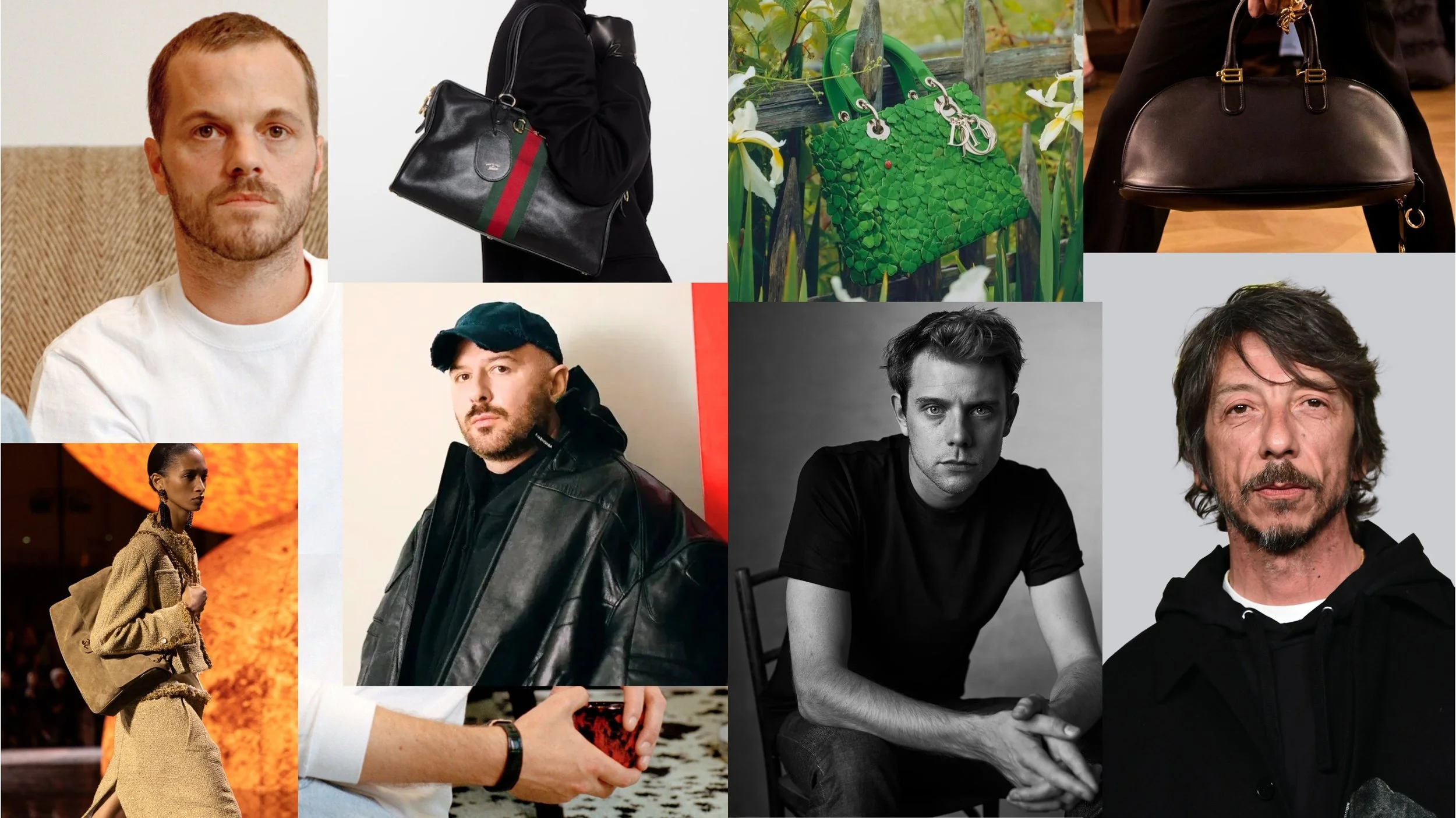
Most people think handbagtrends come from brands
But if you really pay attention,
they come from designers.
From the way they think about proportion.
Material.
Construction.
And right now, there’s a group of designers whose ideas feel… connected.
Not because they’re working at the same house.
But because they’ve been moving between them.
And with every move, they carry something with them.
Not just experience.
But perspective.
The circulation of ideas
Designers today move between houses more than ever.
But what’s interesting is not the move itself.
It’s what moves with them.
The way they approach materials.
The way they build a bag.
The way they decide when something feels finished.
So what we’re seeing isn’t just a shift in roles.
It’s a circulation of ideas.
And that’s why handbags right now feel more aligned across brands than ever before.
Not because they’re copying each other.
But because they’re being shaped by the same minds.
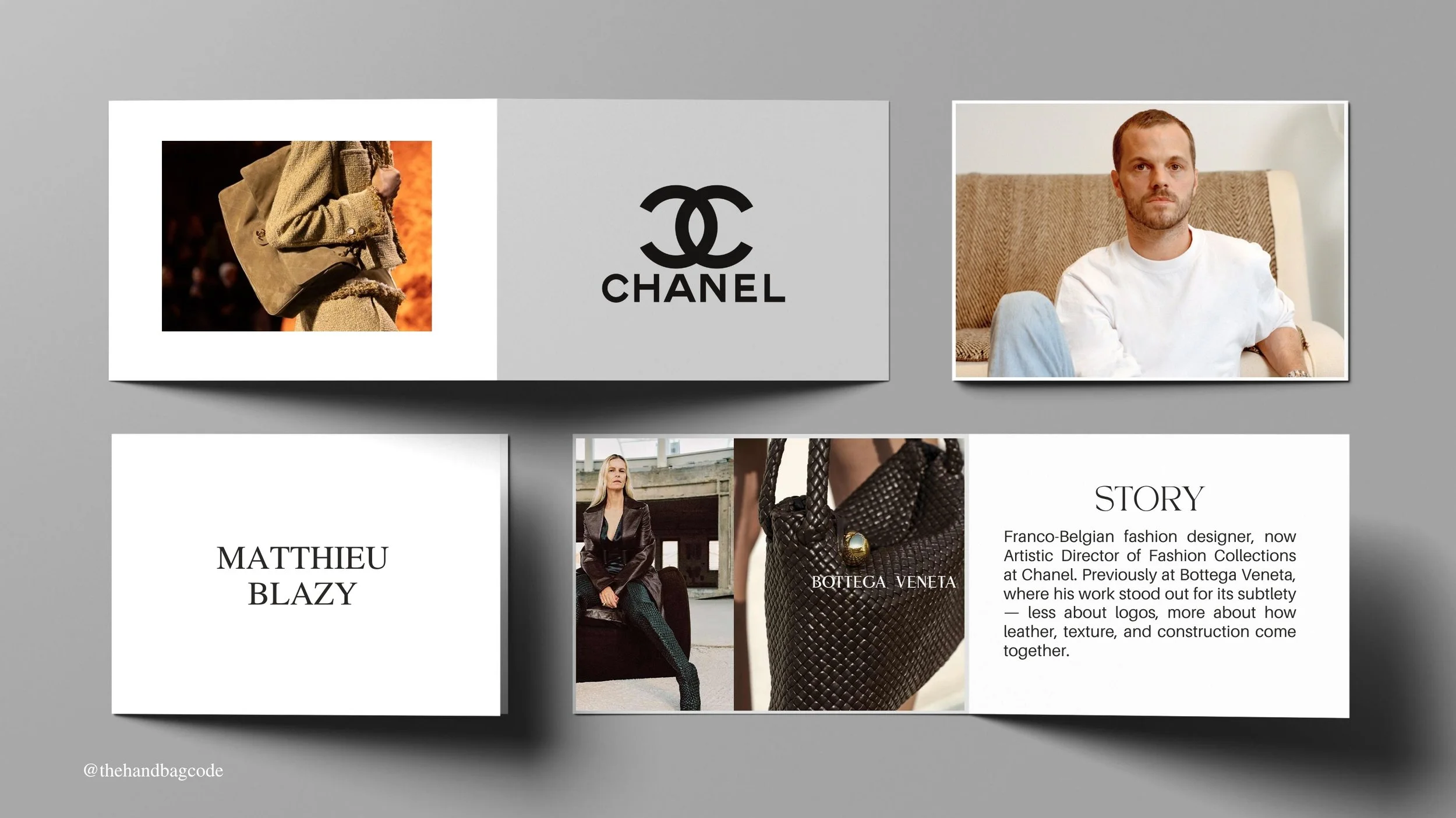
Matthieu Blazy:The one redefining material
Franco-Belgian fashion designer appointed Artistic Director of Fashion Collections at Chanel in December 2024, officially joining the house in April 2025 after completing a non-compete period.
At Bottega Veneta, his work stood out for how subtle it was…less about logos, more about the way leather, texture, and construction came together.
At Chanel, the question isn’t whether he will create something new…but how he will reinterpret one of the most established visual languages in fashion through his focus on material and craftsmanship.
And you can already see his influence across current collections.
Bags where the material does the work.
Where texture replaces branding.
Where the craftsmanship is the point, not the detail.
Blazy changed how we think about material.
Not as something decorative,
but as something that can transform.
Leather that looks like denim.
Surfaces that feel unexpected.
He didn’t create a moment.
He shifted a mindset.
Craftsmanship becoming the new form of innovation.
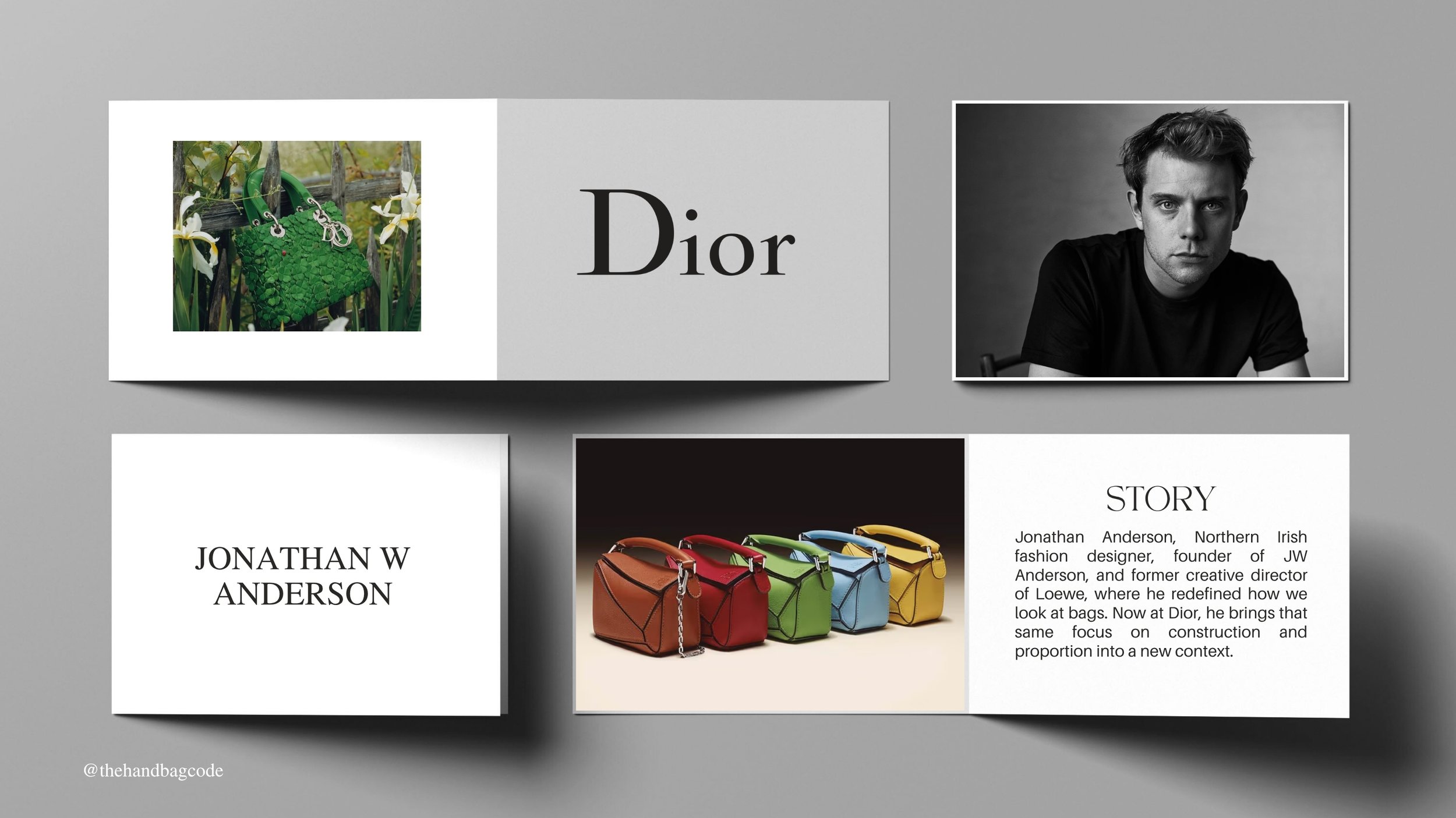
Jonathan W Anderson: The one redefining construction
Northern Irish fashion designer and founder of JW Anderson. Known for his work at Loewe, where he redefined how we look at bags.
As he begins working on Dior, the focus shifts to how his approach to construction and proportion will translate within a house defined by heritage and structure.
And you can already see this shift happening across the industry.
Bags where construction is visible.
Where seams and panels are part of the design.
Where the structure becomes the identity.
Pieces like the Loewe Puzzle bag and the Loewe Amazona 180 weren’t just successful.
They changed the way bags are designed.
And now, that thinking is everywhere.
Construction becoming the new signature.
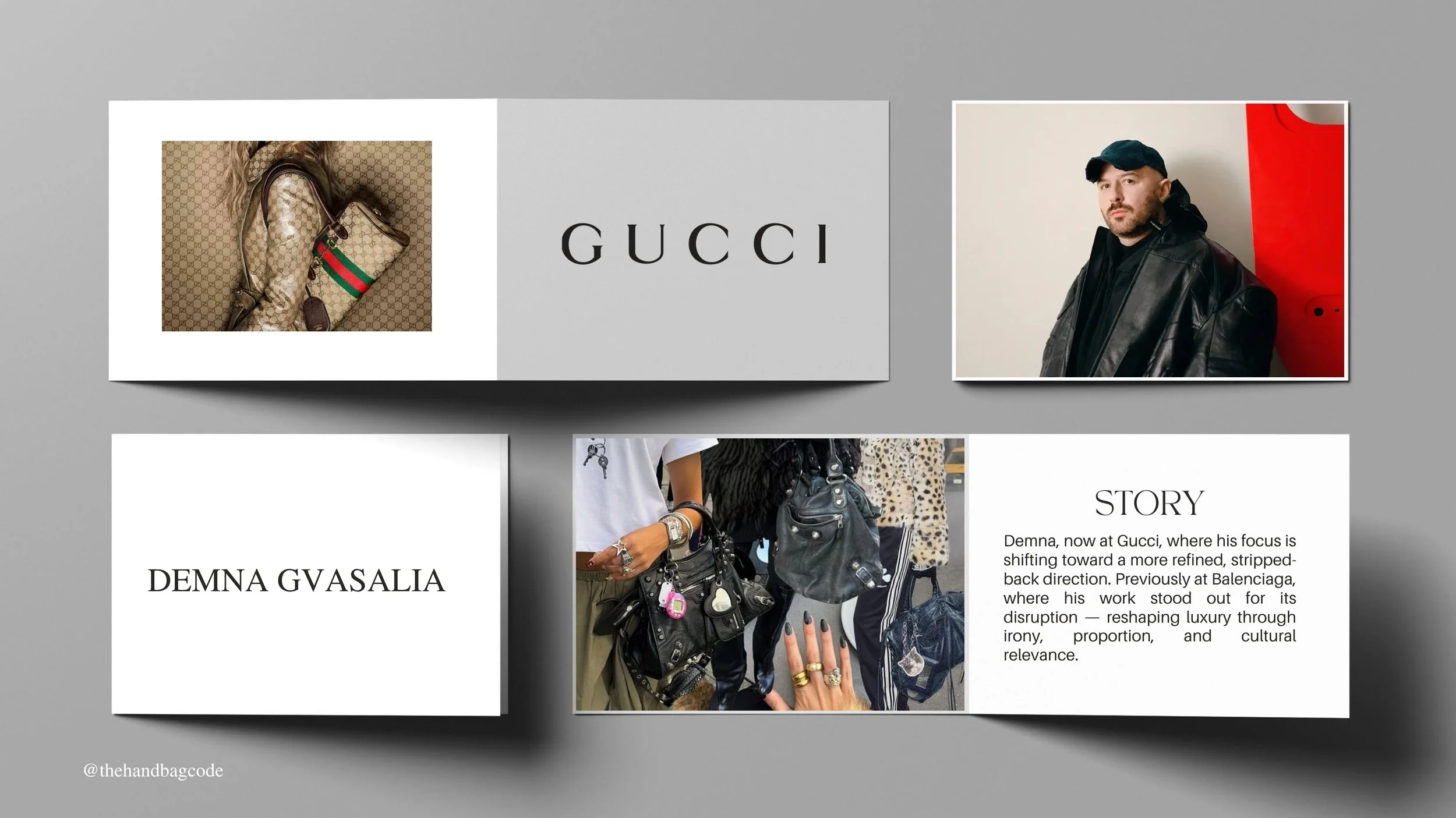
Demna Gvasalia: The one redefining reduction
Georgian fashion designer, now at Gucci, where his focus is shifting toward a more refined, stripped-back direction. Previously at Balenciaga, where he reshaped luxury through disruption, proportion, and cultural relevance.
Demna built his name on pushing things forward.
On exaggeration.
On contrast.
On making people look twice.
But what’s interesting now is the shift.
Less irony.
Less noise.
More control.
And you can already see it.
Bags that feel cleaner.
More resolved.
Less about concept, more about shape.
It’s not about removing identity.
It’s about refining it.
And in a moment where everything has been loud for so long,
that kind of restraint stands out even more.
Less concept, more clarity.
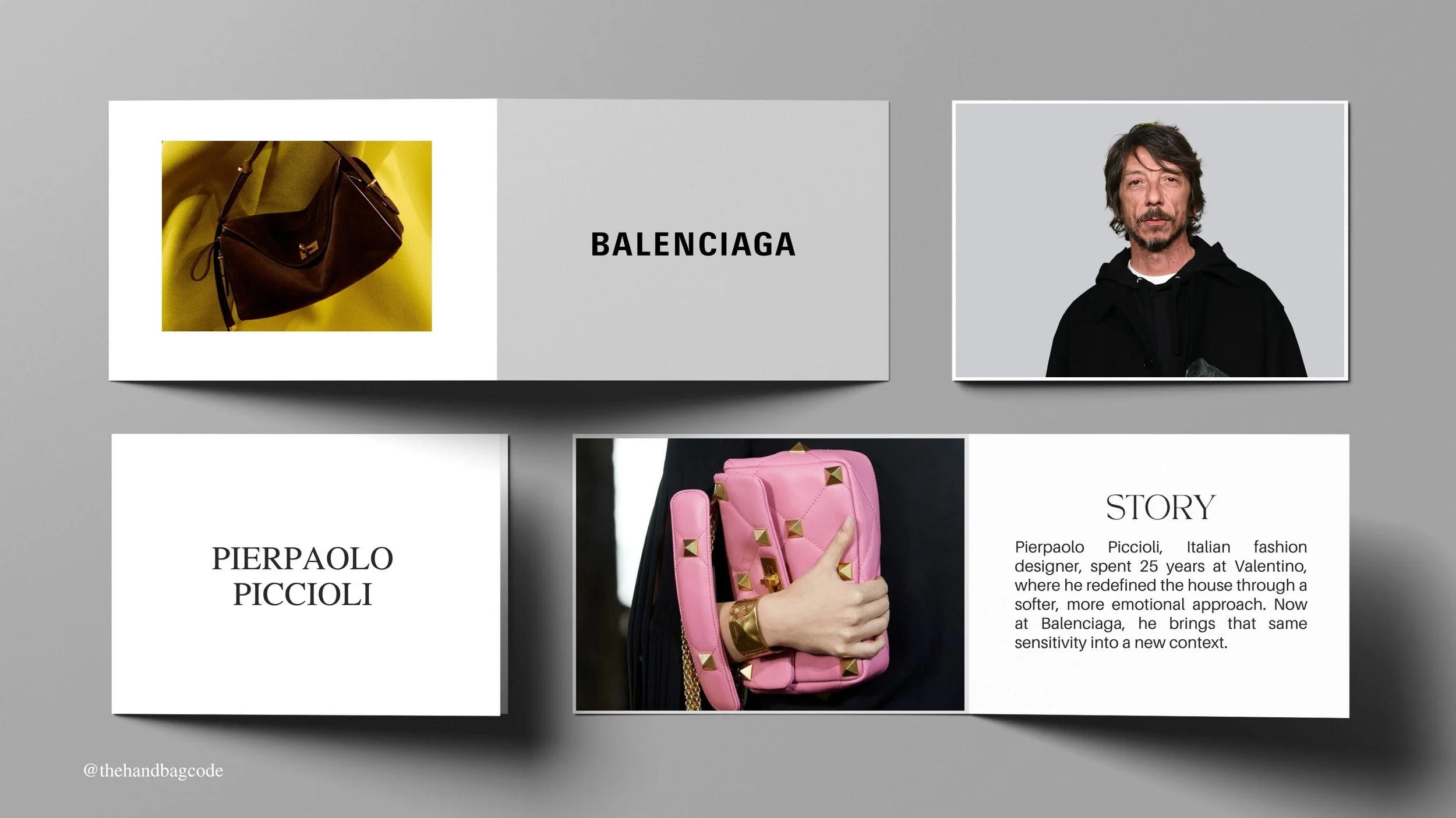
Pierpaolo Piccioli: The one bringing emotion back into design
Italian designer best known for his time at Valentino, where he reshaped the brand into something softer and more human.
His work never felt aggressive.
Even at its most elevated, it always felt… emotional.
As he moves into a new phase, his influence already points toward a quieter, more sensitive approach to luxury…one that feels less about impact and more about how pieces are experienced.
And that shift is already visible.
Bags feel softer.
Less structured.
Less “designed” in an obvious way.
More like something you reach for without thinking.
And in handbags, that translated into:
Softness.
Fluidity.
A certain ease.
Nothing trying too hard.
Which is exactly why it worked.
A shift toward softness over statement.
