Why Quiet Luxury Is About Proportion
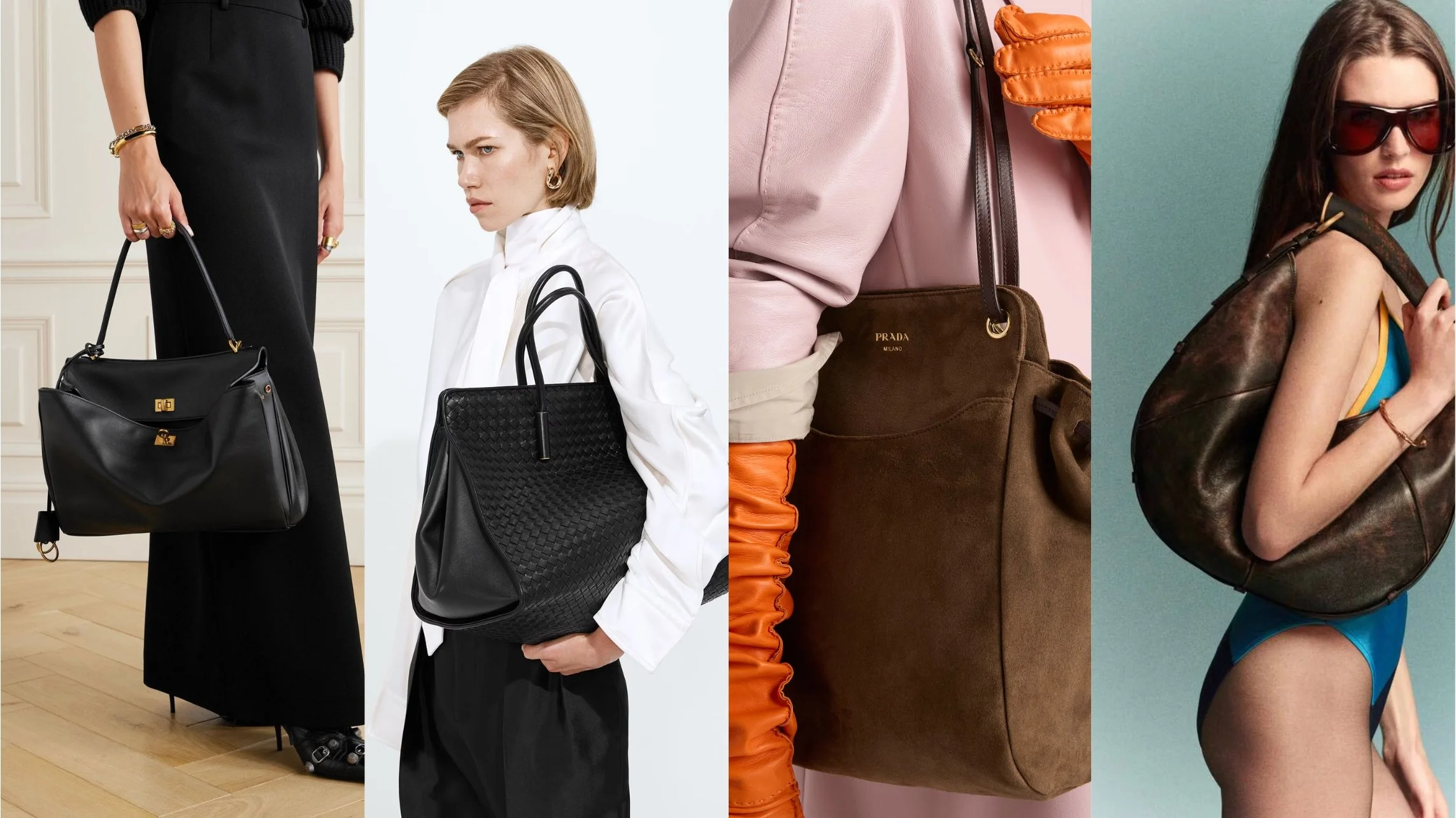
In recent years, handbag design hasn’t become simpler, it has become more precise.
What we’re seeing isn’t just a reduction in logos or hardware.
It’s a shift in what actually defines a bag.
And increasingly, that comes down to proportion.
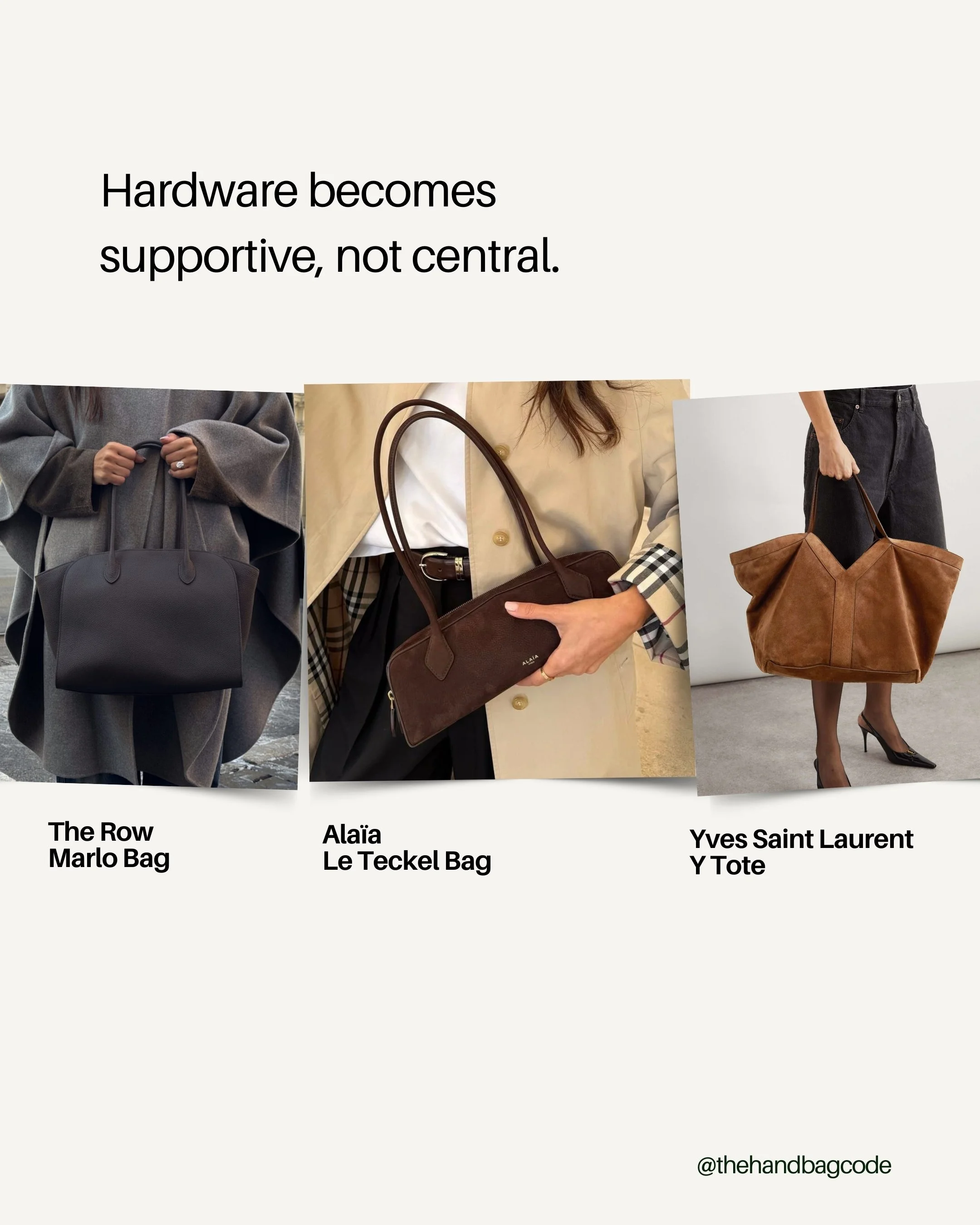
One of the clearest changes is the role of hardware.
In many current designs, hardware is no longer the focal point.
It doesn’t lead the design, it supports it.
You see this across brands like The Row, Alaïa, and Saint Laurent.
The bags feel resolved without needing visible elements to “explain” them.
Handles are clean. Closures are discreet. Branding is minimal or absent.
The visual weight sits in the structure itself.
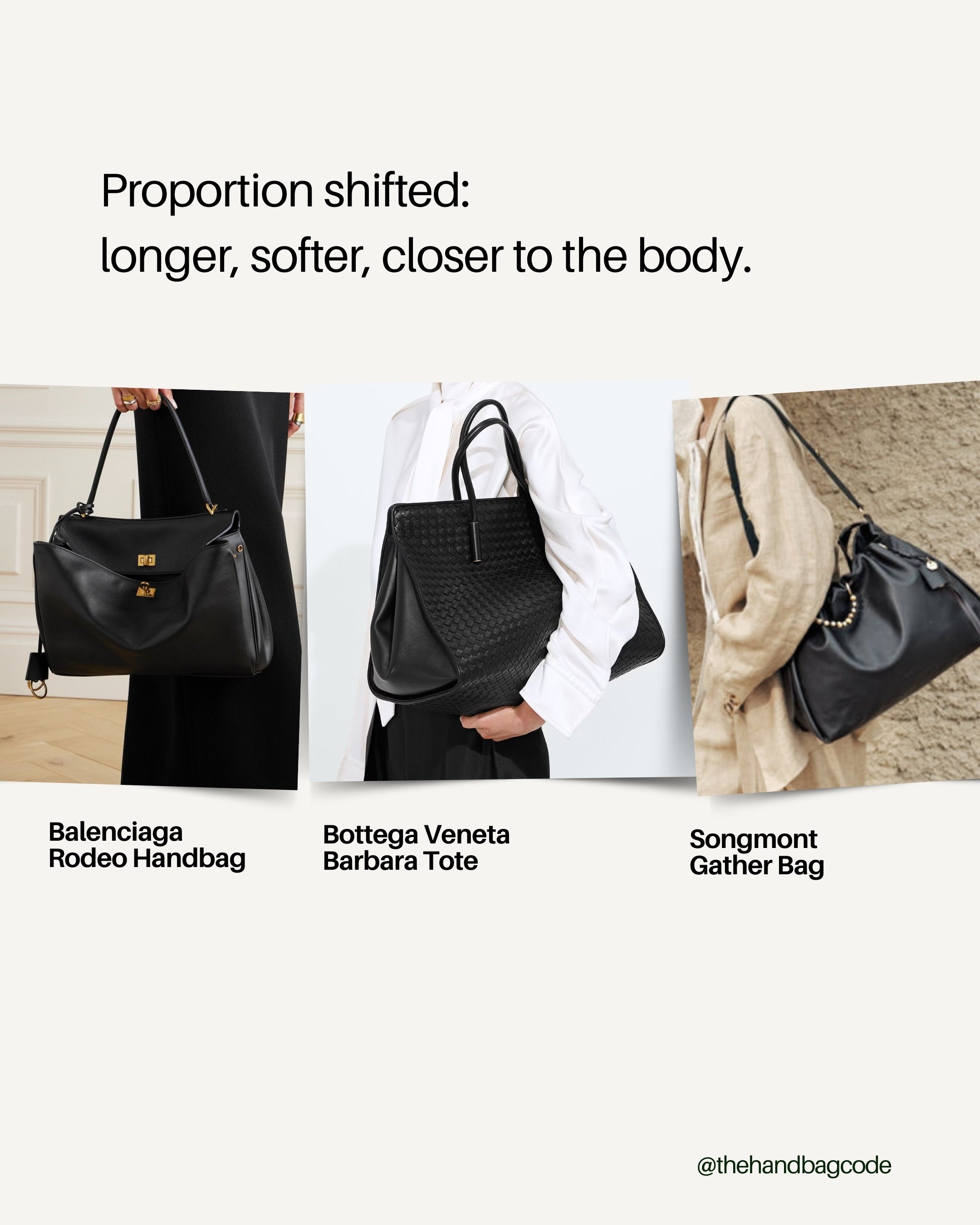
At the same time, proportions have shifted.
Bags are becoming:
longer
softer
and designed to sit closer to the body
This is consistent across very different brands.
The Balenciaga Rodeo, the Bottega Veneta Barbara, and even newer shapes from smaller brands like Songmont all follow this logic.
They’re not rigid statement pieces.
They adapt slightly when worn, but still maintain a clear silhouette.
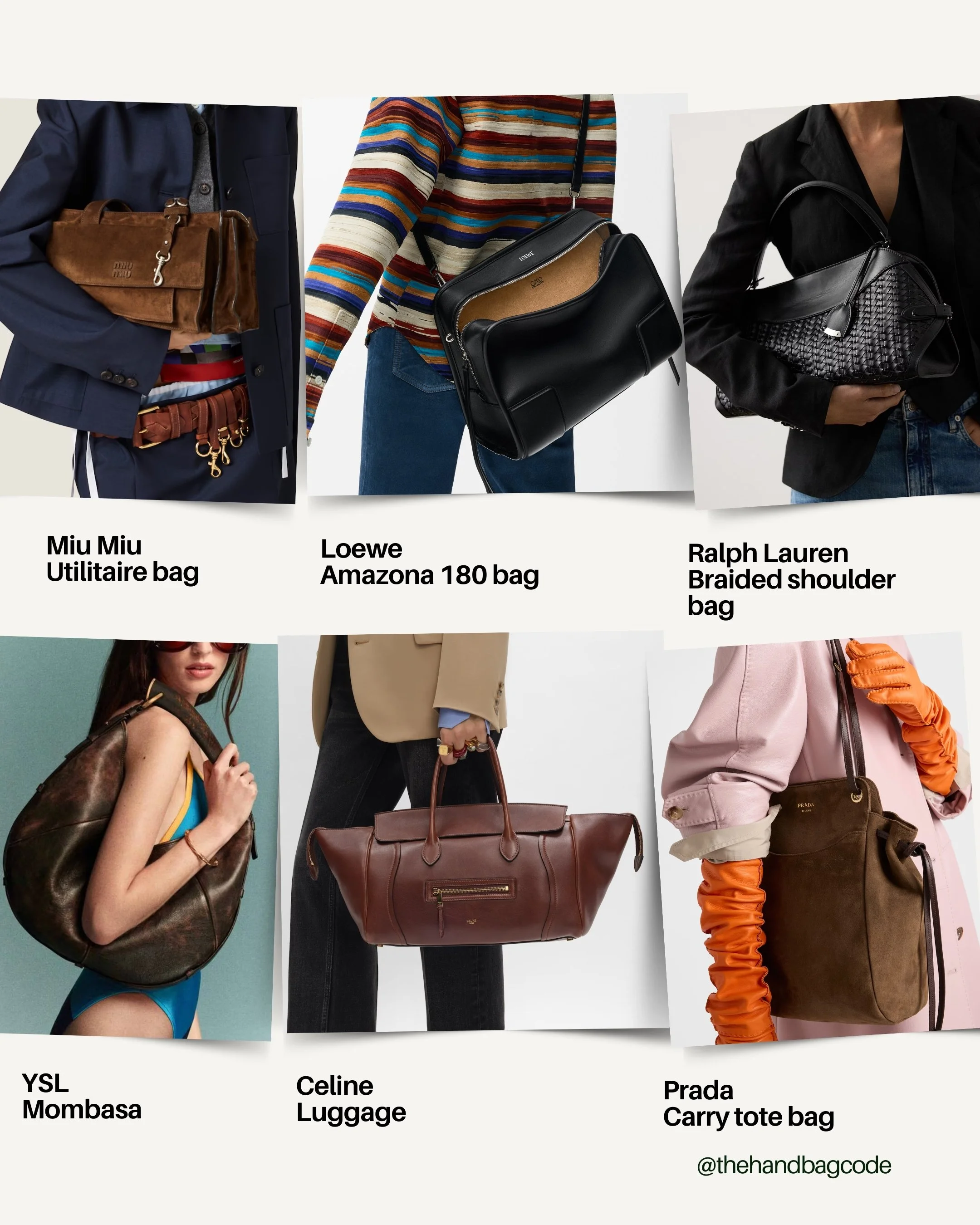
This also changes how the bag interacts with the outfit.
Instead of sitting on top of the look, the bag integrates into it.
Straps are longer.
The drop is lower.
The bag follows the natural line of the body.
You see this in shoulder bags like the Loewe Amazona 180, the return of the YSL Mombasa, and even in more classic formats like the Celine Luggage when styled this way.
Even larger bags are being reconsidered through proportion.
The Prada tote bag, for example, doesn’t rely on branding or hardware to feel relevant.
Its impact comes from scale and balance, wide, structured, and grounded.
What ties all of these together is not a single aesthetic.
It’s a shared approach to design.
Quiet luxury today is less about “minimalism” and more about control.
Control over proportion.
Control over how the bag sits, moves, and integrates.
Because when proportion is right, nothing else needs to compete.
And that’s where modern luxury is moving.